 Fraunhofer Institute for Manufacturing Technology and Advanced Materials IFAM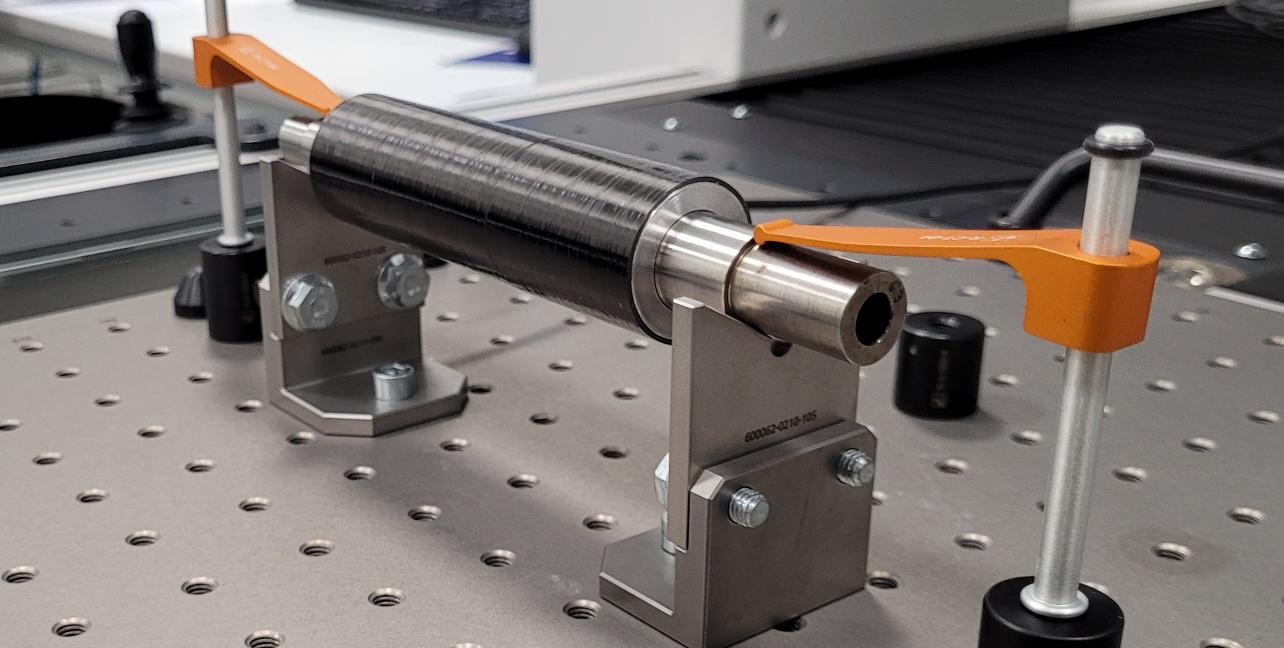
Efficient cooling for high-speed drives
Fuel cell systems place high demands on air path components, as a reliable supply of oxygen to the stack is critical to performance. Electric air compressors, in particular, must reach high speeds, which leads to significant heat generation and can affect the system’s efficiency and service life.
At Fraunhofer IFAM, an electric air compressor with integrated internal liquid cooling was therefore developed. Thanks to a specifically designed cooling system, the heat generated can be dissipated directly in the rotor via the shaft, thereby avoiding critical temperature ranges.
The goal is to significantly increase the power density and reliability of fuel cell systems while ensuring safe operation at high speeds.
Rotor with integrated cooling system
By using liquid cooling, excess heat can be efficiently dissipated, preventing overheating. The liquid is supplied to and removed from the rotor on one side and is pumped through a cooling circuit that is in close contact with the rotor’s outer wall and, therefore, with the laminated stack. The liquid absorbs the heat and is then cooled by a heat exchanger before being recirculated.
Magnet bonding and potting processes for optimal heat transfer
Advancements in bonding magnets and potting processes optimize heat transfer and significantly reduce magnet heating. This ensures safe operating temperatures for the components and enhances the reliability and lifespan of the system. Research results indicate that the internal cooling of the rotor can reduce magnet temperatures from over 200°C to less than 60°C by combining the developments in potting, magnet bonding, and integrated liquid cooling. These developments were determined through a customized test setup for rotor internal cooling with various conceptual solutions.
Innovative solutions for increasing power density
Additionally,, these developments based on structural mechanical design allow for a more homogeneous stress distribution of the resulting centrifugal forces in the rotor. The use of a carbon fiber-reinforced plastic sleeve, in combination with potting, results in an increase in rotational speed endurance. This allows for circumferential speeds of more than 200 m/s, increasing the power density of the electric air compressor to over 30 kW/kg. This technology has a key role in the further development of fuel cell systems and the promotion of electromobility in both commercial vehicles and aviation sectors.