Elemental Analysis (C, H, N, O, S) – Precise Material Analysis

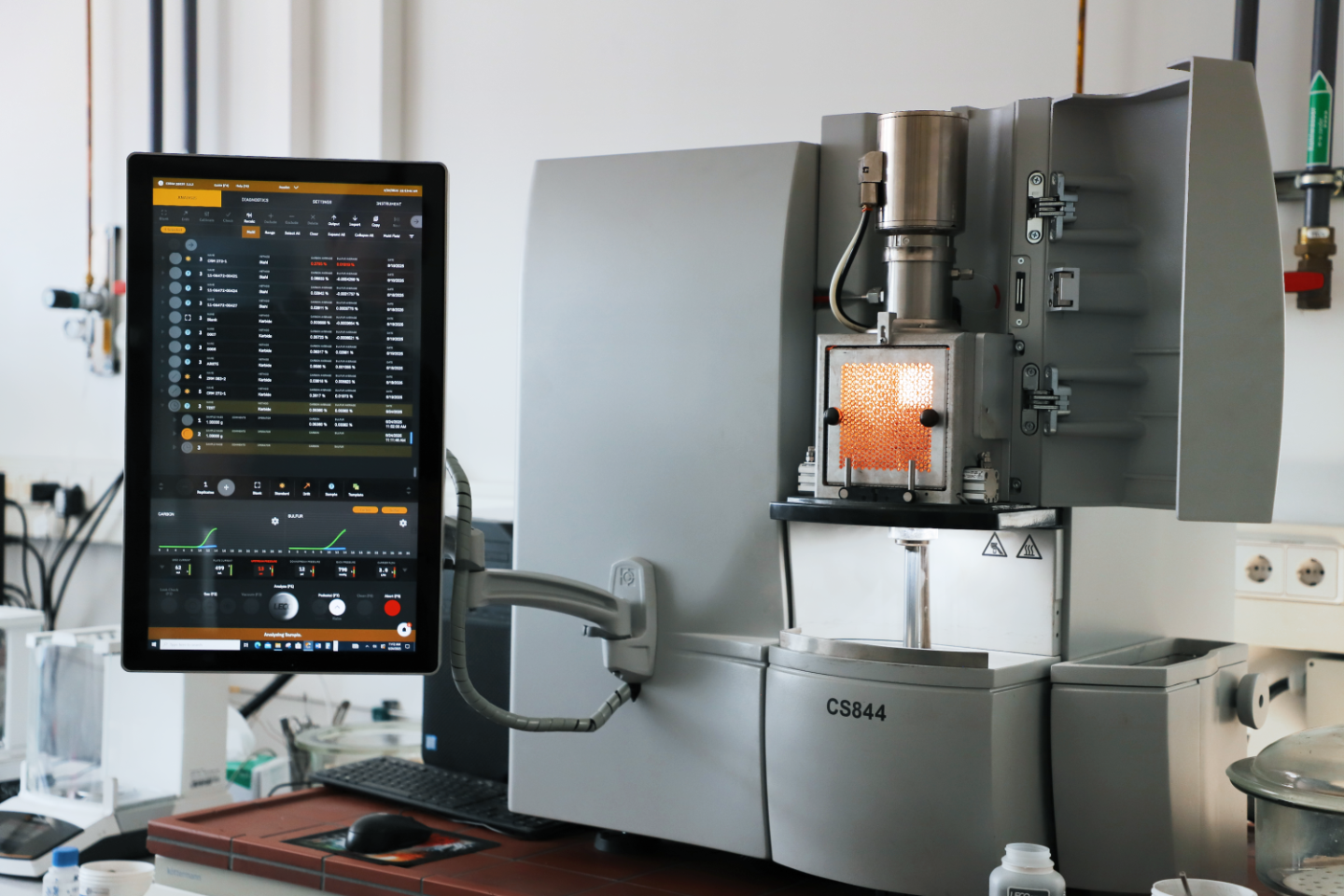
CHNS-Elementaranalysegerät im Labor des Fraunhofer IFAM Dresden
© Fraunhofer IFAM Dresden

Elemental analysis is a key method in chemical analysis used for the quantitative determination of the elements carbon (C), hydrogen (H), nitrogen (N), oxygen (O), and sulfur (S) in solids. At Fraunhofer IFAM Dresden, we perform elemental analyses using CHNS and ONH methods with high accuracy and reproducibility.

This analytical method is suitable for metallic and ceramic materials, powders, and other inorganic materials. Typical applications include quality control, materials development, failure analysis, and research and development projects in industry and science. The analytical data obtained provide a reliable basis for evaluating chemical composition and verifying material properties.

CHNS-Elementaranalysegerät im Labor des Fraunhofer IFAM Dresden
© Fraunhofer IFAM Dresden
CHNS-Elementaranalysegerät im Labor des Fraunhofer IFAM Dresden
© Fraunhofer IFAM Dresden
CHNS-Elementaranalysegerät im Labor des Fraunhofer IFAM Dresden
© Fraunhofer IFAM Dresden

Measurement Principle of Elemental Analysis (CHNS and ONH)

CS

In CHNS analysis, the sample is combusted in a stream of oxygen. The resulting gases are detected using non-dispersive infrared spectroscopy (NDIR) and quantitatively analyzed. This method allows for the precise determination of the carbon, hydrogen, nitrogen, and sulfur contents.

Analyzer: CS844 from LECO

Accreditation according to DIN EN ISO/IEC 17025:2018

ONH

The ONH analysis is used to determine oxygen, nitrogen, and hydrogen. The sample is heated in a graphite crucible under an inert gas atmosphere. The released gases are detected and evaluated using calibrated standards. Both methods enable reliable elemental analysis even at low concentrations.

Analyzer: ONH836 from LECO

Accreditation according to DIN EN ISO/IEC 17025:2018 (The determination of hydrogen is not subject to accreditation but is performed according to an in-house procedure.)

Applications of Elemental Analysis

Elemental analysis is used, among other things, for:

  • chemical characterization of metals, ceramics, and inorganic materials
  • quality control in industrial manufacturing
  • analysis of impurities and trace elements
  • material development and process optimization
  • research and development in the field of materials science

By combining modern measurement technology with many years of experience, even complex analytical challenges can be reliably addressed.

Measurement Ranges and Accuracy

Elemental analysis covers a wide measurement range, from a few ppm to high percentages. Depending on the element and the sample matrix, accuracies of better than 1 ppm or relative standard deviations of ≤ 0.5% are achieved. The analyses are performed under controlled laboratory conditions and in accordance with established quality standards.

FAQ on Elemental Analysis

What is elemental analysis?

Elemental analysis is an analytical method for the quantitative determination of individual chemical elements in a sample. It is frequently used to analyze materials and inorganic substances.

Which elements can be analyzed?

Typically, carbon, hydrogen, nitrogen, oxygen, and sulfur (C, H, N, O, S) are analyzed.

Which samples are suitable for elemental analysis?

Suitable samples include metals, ceramics, powders, and other inorganic solids. Samples sensitive to oxygen and moisture can be handled under inert gas conditions.

How accurate is elemental analysis?

Depending on the element and method, accuracy is in the ppm range or better. The methods are designed for precise quantitative analysis.

For which applications is elemental analysis useful?

It is used in quality control, materials development, failure analysis, and research and development projects.