 Fraunhofer Institute for Manufacturing Technology and Advanced Materials IFAM
Optimize printing processes, ensure quality, and reduce production costs
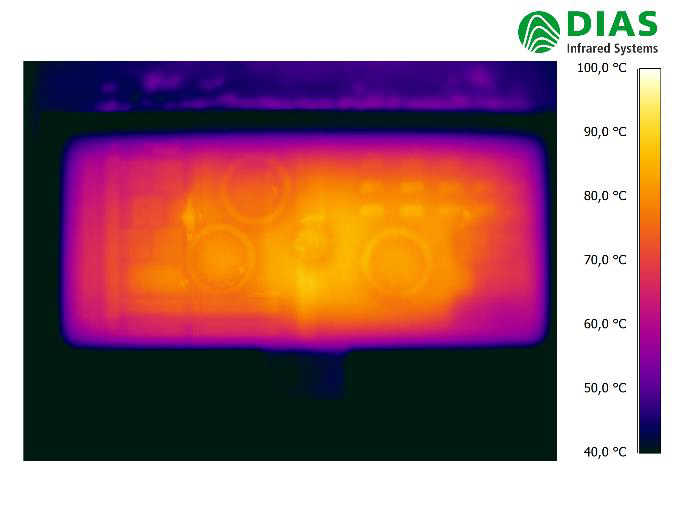

Industrial printing processes are an important part of modern manufacturing. Whether used for printed electronics, functional coatings, or additive manufacturing, the quality of the final product depends largely on how stable and reproducible the overall process is.
Variations can arise from a wide range of factors. The consequences can range from quality deviations and rework to scrap and rising production costs. A stable and reproducible process therefore not only helps ensure consistent product quality but can also reduce scrap and rework, lower production costs, and improve manufacturing cost efficiency.
Fraunhofer IFAM helps companies systematically analyze and optimize printing processes and stabilize them for production at scale. To achieve this, we combine process and materials expertise with analytical methods, measurement technology, data analysis, and hands-on training.
What makes a manufacturing process stable?
Consistent product quality requires relevant influencing factors to be controlled throughout the entire process chain. These include, for example, print quality, layer thickness, line resolution, adhesion, drying, and material properties.
These factors can interact with one another and affect the quality of the printed result. Systematic process analysis helps identify critical influencing factors and develop appropriate control strategies.
The goal of process stabilization is to achieve reproducible production with greater process reliability, even at high production volumes.
Identifying quality variations and determining their causes
When a printing process produces inconsistent results, a variety of underlying causes may be responsible. Potential influencing factors include:
- Material properties
- Unsuitable process parameters and unstable process windows
- Equipment and environmental conditions
- Inadequate process monitoring
- Insufficient or inadequate personnel training
At Fraunhofer IFAM, we identify influencing factors and determine optimal process windows to reduce defective parts, increase equipment availability, and significantly improve reproducibility. Companies can benefit from lower production costs and greater process reliability.
From analysis to production at scale: services offered by Fraunhofer IFAM
Fraunhofer IFAM supports companies throughout the various stages of process optimization and stabilization, offering services such as:
- Analysis and evaluation of existing printing processes
- Identification of root causes of defects and quality deviations
- Development of stable process windows
- Implementation of quality management and inspection concepts
- Implementation of in-line and off-line monitoring
- Reduction of scrap and rework
- Optimization of material usage and equipment availability
- Transfer of developed processes to production at scale
- Employee training through practical, hands-on seminars
Both individual process steps and the entire process chain can be evaluated.
In which printing processes does Fraunhofer IFAM have in-depth expertise?
Fraunhofer IFAM has expertise in a range of printing and manufacturing processes, including:
- Printed electronics
- Functional coatings
- Screen printing and pad printing
- Inkjet and aerosol jet printing
- Additive manufacturing, including:
- Metal Binder Jetting (MBJ)
- Laser Powder Bed Fusion (LPBF)
- Selective Laser Sintering (SLS) and stereolithography (SLA)
- Hybrid processes
- All standard pre-processing and post-processing methods
This expertise makes it possible to address a wide range of requirements for industrial printing and additive manufacturing processes.