Non-Stick Coatings for Injection Molds

Targeted Reduction of Demolding Problems and Deposit Formation in Injection Molding
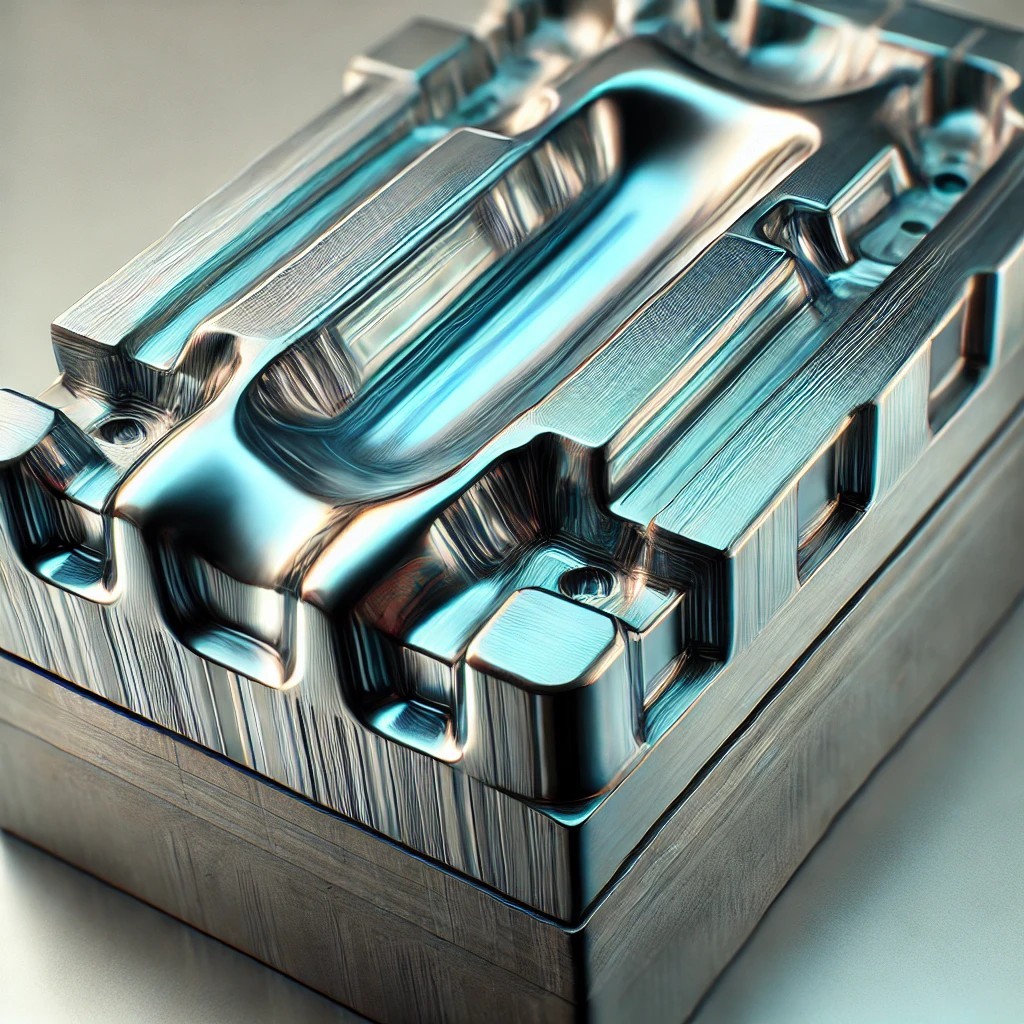
© generated with KI

High ejector and demolding forces, sticking components and mold deposit formation (also called mold fouling, mold buildup or plate-out) are among the most common causes of injection-molding defects and unstable processes. In such situations, coating injection molds with anti-stick coatings can help and may offer a cost-effective alternative to complex mold modifications.

Anti-stick mold coatings address the causes of demolding problems and mold deposit formation. These issues are rarely caused by a single factor; instead, they result from the interaction between the polymer, the mold surface, and process control.

We support industrial partners in understanding these interactions and resolving the underlying issues in a targeted manner. Our expertise not only covers root-cause analysis and general recommendations for injection-molding tool coatings and surface treatments. We also develop specialized PFAS-free tool coatings (UltraPLAS®) with exceptional anti-stick properties to prevent mold fouling and minimize demolding forces and support the application-oriented implementation in the actual process.

Typical Challenges in Injection Molding

Kleben eines TPE-Formteils und Belagsbildung
© Fraunhofer IFAM
Kleben eines TPE-Formteils im Werkzeug (links) und Belagsbildung auf einem Werkzeugeinsatz (rechts)

Demolding and deposit problems arise from the interaction between the polymer, process control, and mold surface and design.

Typical symptoms include:

  • Components sticking in the mold
  • High ejector and demolding forces
  • Deposit formation in cavities and vents
  • Surface defects and warpage
  • Short cleaning intervals
  • Unstable processes

Technical polymers, TPEs, high-performance polymers, and high-gloss or microstructured mold surfaces are particularly affected, especially when processes have narrow temperature and processing windows or molds feature unfavorable cooling conditions and draft angles.

Mold Coatings as a Solution

Coatings for injection molds selectively modify the interface between the polymer melt and the mold surface. This can reduce adhesion, friction and deposit formation.

Depending on the application, mold coatings can help to:

  • Reduce demolding forces
  • Minimize adhesion
  • Reduce mold fouling and cleaning effort
  • Improve process stability
  • Extend mold service life

The decisive factor is not only the coating itself, but also an understanding of the underlying mechanisms before a potential technical solution is evaluated. 

UltraPLAS® - Plasma-Based Non-Stick Coating

UltraPLAS®, a plasma-based non-stick coating, was developed at Fraunhofer IFAM specifically for demolding and deposit problems in injection molding. The coating is based on a PECVD process (plasma-enhanced chemical vapor deposition) and offers:

  • Very low surface energy
  • High chemical and mechanical stability
  • PFAS-free non-stick performance
  • Transfer-free release behavior
  • Extremely low coating thickness
  • High contour fidelity for high-gloss surfaces and microstructures
  • Resistance to cleaning processes

The coatings are specifically developed for applications in which conventional release agents or standard coatings reach their limits.

Our Areas of Focus

Reducing Demolding Forces in Injection Molding

High demolding forces are often caused by adhesion between the plastic and the mold surface and are influenced by many factors.

Mold Deposit Formation in Injection Molds

Deposits in injection molds can cause surface defects or sticking, which in turn lead to increased cleaning efforts and unstable processes. Coatings can help reduce deposit buildup and extend cleaning intervals.

Mold Deposit Analysis

Not every scaling problem can be solved by coatings alone. That is why we analyze the components that cause scaling and their root causes using modern analytical methods.

UltraPLAS®

The UltraPLAS® coating was developed specifically for demanding applications in plastics processing – such as high-gloss, microstructured, or functional mold surfaces.

Our Approach: Root cause analysis and tailored technical solutions

We support companies throughout the entire solution process:

  • Analysis of demolding and mold deposit problems
  • Assessment of mold surfaces
  • Selection of suitable coating strategies
  • Sample and reference coatings
  • Application-oriented validation in the process

Our focus is on technically robust and economically viable solutions for industrial applications in plastics processing.